Green Schools

Empowering Educators for a Greener Tomorrow: Climate Change Teachers’ Workshop

On November 7, 2026, the Schuylkill Center for Environmental Education hosted an inspiring and collaborative Climate Change Teachers’ Workshop. Directed by Aaliyah Green Ross, the Schuylkill Center’s Director of Education, the event welcomed 15 passionate educators from across all grade levels to learn, share, and gather tools to engage their students in meaningful climate action. Rather than focusing solely on the daunting realities of climate change, the workshop centered heavily on hands-on games, curriculum integration, and community-driven solutions.
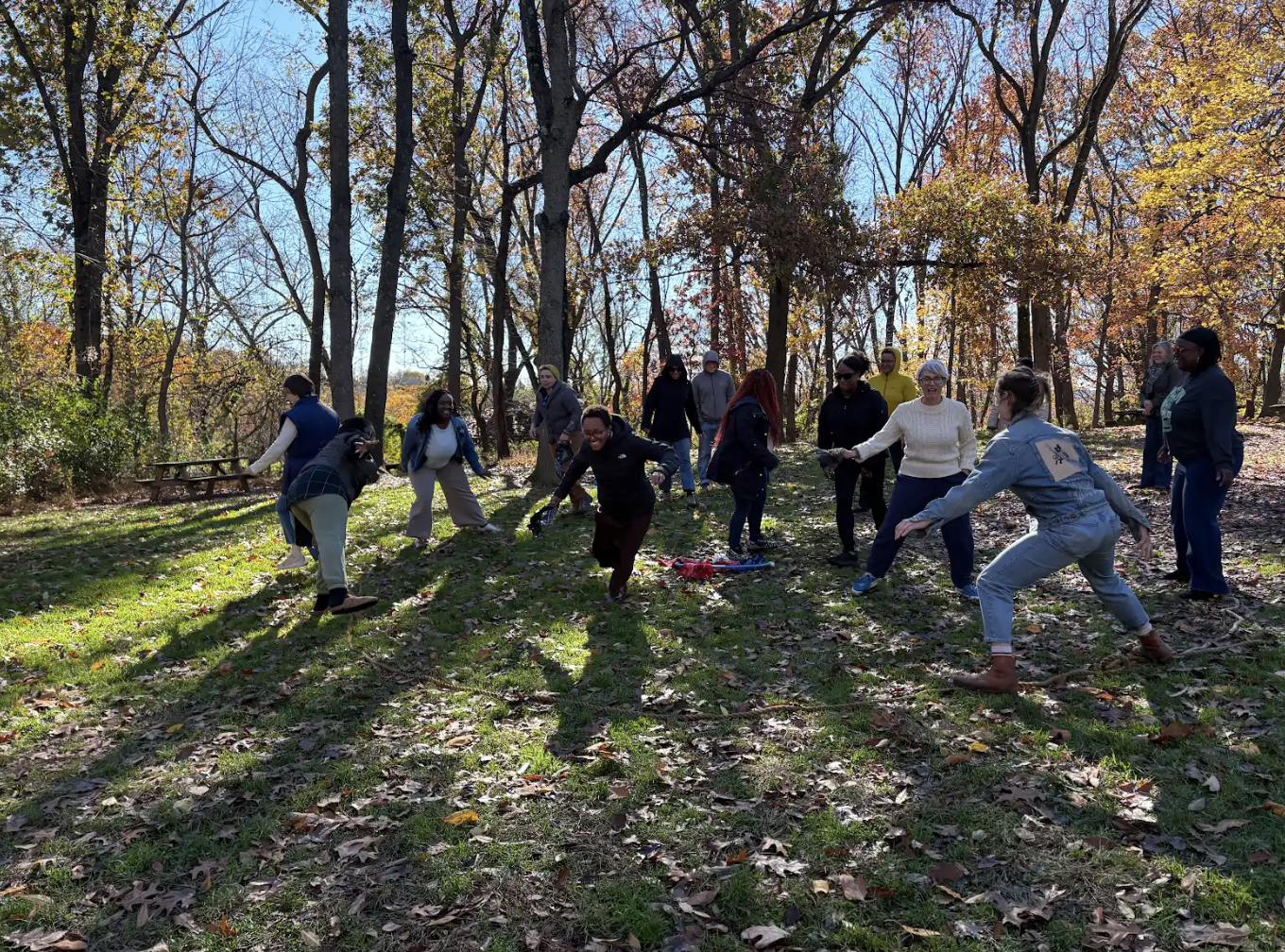
Teachers participate in a game of tag to demonstrate Earth’s heat trapping abilities to take back to their classrooms.

Roots of Change: Tree Equity and the Legacy of Redlining

A major highlight of the day was a presentation on Tree Equity and Climate Change by Julie Knutson, a teacher at SCH Academy, alongside SCH twelfth-grader Quinn Clotman. Quinn shared her inspiring three-year journey into urban forestry, which began as a simple Girl Scout project.

“I began looking into trees and tree inequity as part of my Girl Scout Gold Award project,” Quinn shared. “I learned that there are so many areas in the City where there just aren’t any street trees and, in turn, a complete lack of coverage.”

Through history and biology classes, Quinn connected this tree deficit to "redlining"—the lasting environmental legacy of 1930s federal housing policies that graded neighborhoods as "hazardous" based on race and ethnicity. Today, modern studies show that these formerly redlined neighborhoods in Philadelphia possess significantly fewer trees and less green infrastructure compared to historically green-lined areas, leaving them highly vulnerable to extreme heat.

Quinn didn’t just study the problem—she took action. Quinn did canvassing work with Cool Down Northwest Philly, engaging residents to plant and care for trees and she also volunteered at free yard tree giveaways. Her advocacy, supported by her teacher Julie Knutson, culminated in organizing a community tree planting activity on the SCH Academy campus.
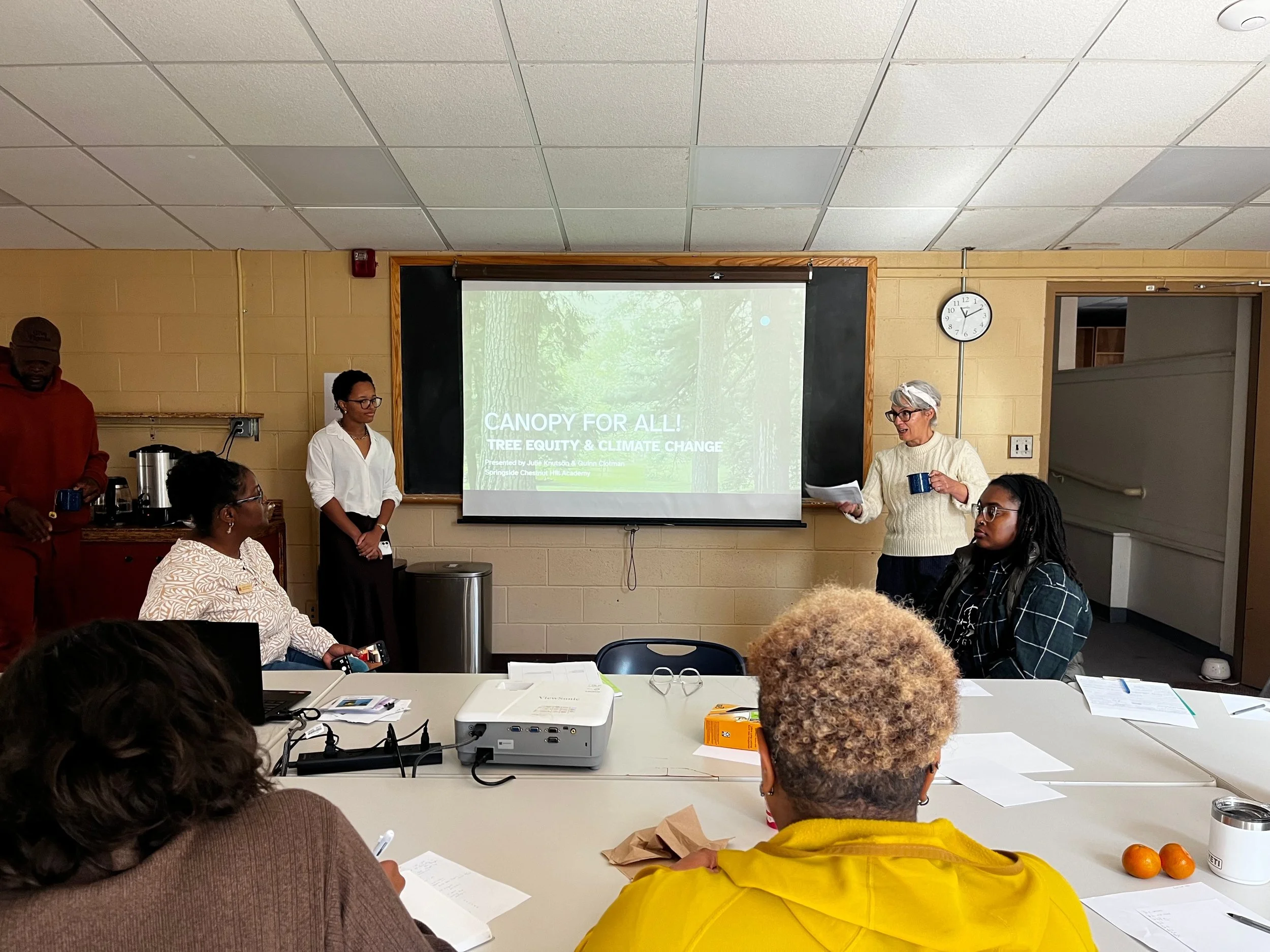
SCH Academy’s teacher, Julie Knutson, and twelfth grader, Quinn Clotman, present how tree canopy in Philadelphia relates to climate change.

Actionable Resources for the Classroom

Educators left the session with new ideas and resources to help bring environmental literacy alive in their classrooms:

  • Philadelphia Heat Vulnerability Index: Shared by Aaliyah Green Ross, this vital tool helps teachers and students analyze local data on heat exposure and sensitivity, illuminating environmental justice issues directly within their own city lines.

  • Eco-Schools Program: Megan Garner, Director of Sustainability and Green Schools at the School District of Philadelphia, introduced this initiative. Created by the National Wildlife Federation, the Eco-Schools framework integrates environmental literacy into school operations and curricula. Participating schools follow a structured pathway to earn Bronze, Silver, or prestigious Green Flag awards by actively reducing waste, conserving resources, and empowering students to spearhead local climate action.
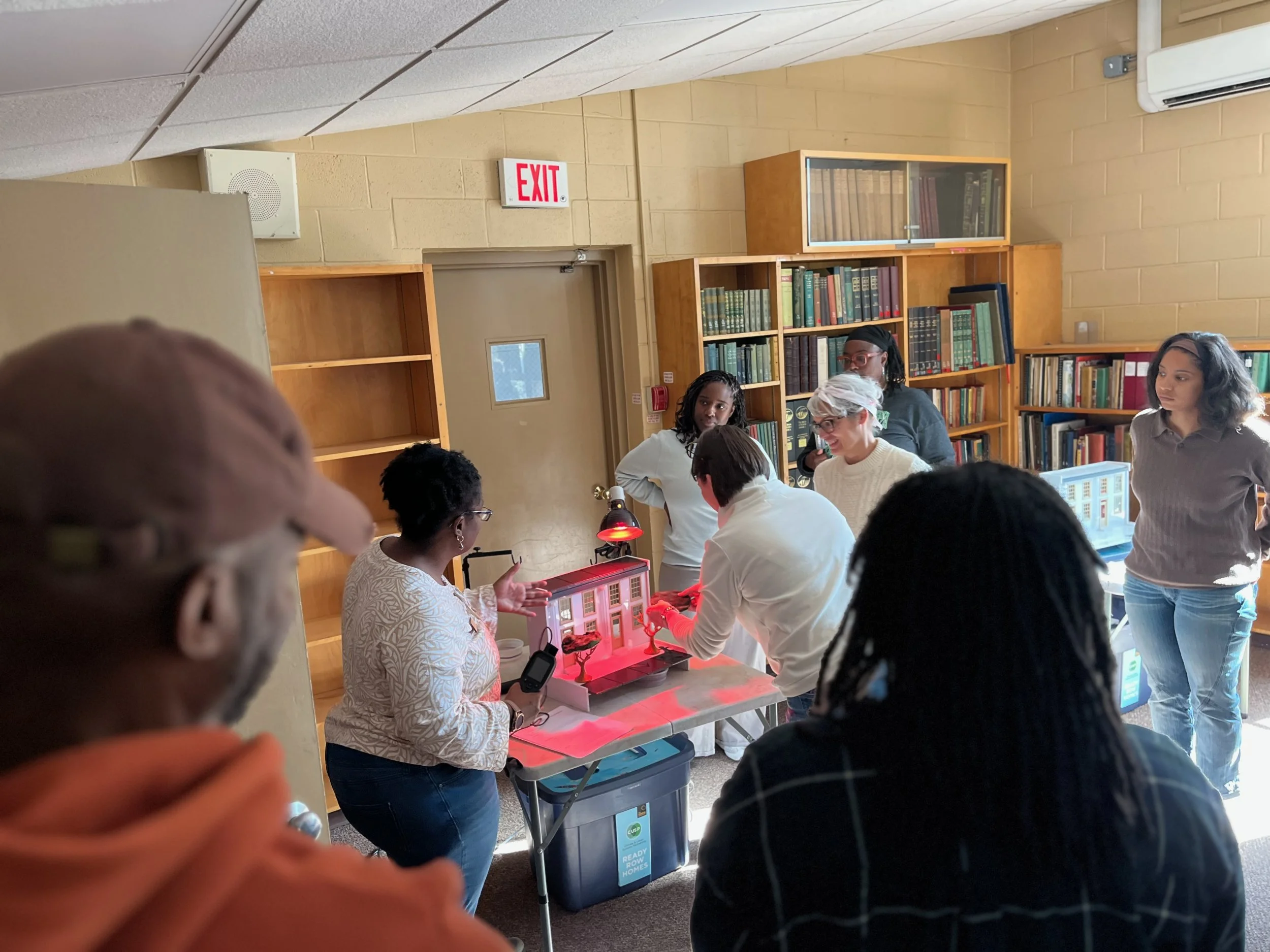
Schuylkill Center’s Director of Education, Aaliyah Ross Green, demonstrates the impacts of climate change using “Ready Row Houses” models on loan from the Franklin Institute and the School District of Philadelphia.

A Hopeful Outlook for Philadelphia Schools

The impact of the workshop was immediately evident in the feedback from attending teachers. Teacher Juniper Sweeney noted, "I learned new ways to make climate change and the greenhouse effect more real" for students.

Steve Kim echoed this enthusiasm, emphasizing the long-term community value of the event. “I learned about a lot of resources teachers and kids can use to help them connect with the school and community," Kim said. "And this helps kids stay involved and be engaged with their learning.”

By the close of the afternoon, local educators walked away with a renewed sense of hope. Equipped with the right tools, Philadelphia's teachers are ready to inspire the next generation to focus not just on climate change problems, but on being a definitive part of the solutions.

Article by Mary Ann Boyer of Boyer Sudduth Environmental Consultants.

Adaptive Reuse and Sustainability in Action at PAISBOA Meeting at GFS

Adaptive Reuse and Sustainability in Action at PAISBOA Meeting at GFS

What does sustainability look like in practice on a school campus? At the recent PAISBOA Sustainability Meeting hosted by Germantown Friends School (GFS), participants experienced firsthand how thoughtful design, campus stewardship, and student engagement can bring a school’s sustainability values to life.

Adaptive Reuse and Sustainability in Action at PAISBOA Meeting at GFS

Adaptive Reuse and Sustainability in Action at PAISBOA Meeting at GFS

What does sustainability look like in practice on a school campus? At the recent PAISBOA Sustainability Meeting hosted by Germantown Friends School (GFS), participants experienced firsthand how thoughtful design, campus stewardship, and student engagement can bring a school’s sustainability values to life.

Case Study: Middlebury College’s Journey Towards a Carbon-Neutral Campus

Case Study: Middlebury College’s Journey Towards a Carbon-Neutral Campus

Middlebury College has positioned itself as a leading environmentally-conscious institution and is one of the first colleges/universities in the world to achieve carbon neutrality. A core part of the college’s mission statement emphasizes “addressing the world’s most challenging problems” – a vision that the community has actively pursued through its deep commitment to environmentalism and sustainability.

2024 PAISBOA Sustainability Survey Results Are In!

 2024 PAISBOA Sustainability Survey Results Are In!

On March 6, PAISBOA Sustainability Group met virtually to review the Sustainability School Survey results, now in its third year. The survey aims to document the sustainability practices and progress among PAISBOA schools, and enables individual schools to see where they fall in comparison to peer institutions. PAISBOA’s Ron Hill and Boyer Sudduth’s Mary Ann Boyer and intern, Fernando Leon Rueda, shared the survey findings.

2024 PAISBOA Sustainability School Survey Results Are In

2024 PAISBOA Sustainability School Survey Results Are In

On March 6, PAISBOA Sustainability Group met virtually to review the Sustainability School Survey results, now in its third year. The survey aims to document the sustainability practices and progress among PAISBOA schools, and enables individual schools to see where they fall in comparison to peer institutions. PAISBOA’s Ron Hill and Boyer Sudduth’s Mary Ann Boyer and intern, Fernando Leon Rueda, shared the survey findings.

A Small School Tackles Big Changes: a Sustainable Renovation

A Small School Tackles Big Changes: a Sustainable Renovation

Surrounded by 55 acres of lush green landscape, Dana Hall School is situated in the town of Wellesley, a suburb of Boston, MA. This independent boarding and day school for girls grades 5-12 is currently on an ambitious mission. Since July 2022, Dana Hall has been renovating their entire Upper School Building in a way that reflects their value for sustainability. Here is how this small school is tackling this big project.

Eco-Schools USA: a Short Guide for Teachers & Administrators

Description

National Wildlife Federation’s Eco-Schools program is a free third-party certification program that uses school-based action teams of students, administrators, and educators to drive environmental stewardship and education in schools. Eco-Schools - USA has over 5,000 schools that are registered and internationally operates in over 60 countries.  Schools can achieve four levels of certification: Bronze, Silver, Gold, and the internationally renowned Green Flag. Each level is based on the number of points a school achieves.

Certification Framework

Eco-Schools’ steps to achieve certification:

Authentically Engage the Community: Foster genuine connections both within and beyond the school environment, cultivating purposeful relationships. 

Form an Action Team: Establish a student-led committee rooted in both the school and the community. Harness the group’s skills to drive environmentally-focused initiatives for the school community.

Develop an Action Plan: Develop a comprehensive plan outlining specific goals, actions, and timelines for improvement.

Take Action, Collect Data, and Measure Impact: Explore nature-based and community-driven solutions for addressing issues outlined in the team's action plan. Use accessible, fact-based storytelling to inform, raise awareness, and inspire action. 

Monitor and Evaluate Progress: Gather information before and after to assess and measure the success of a school’s plan. Inform the school community about the progress and action results.

Identify Curricular Connections: Encourage curricular connections across disciplines. 

Establish an Eco-Code and Celebrate: Acknowledge everyone who contributed and the remarkable positive influence on the school community. Create a code or framework for the future and showcase the school's achievement and celebrate!

Framework in Action

Once a school is registered, there are action steps to further a school’s sustainability goals that connect to the UN Sustainable Development Goals. On the Eco-School’s dashboard, there are points that a school must meet in order to achieve a specific level: 

Credit: EcoSchools United States

Themes Addressed by Eco-Schools

Eco-Schools addresses various environmental themes, allowing schools to tailor their sustainability efforts. These may include:

  • Waste Reduction: Strategies to minimize waste and promote recycling.

  • Energy Conservation: Initiatives to reduce energy consumption and increase efficiency.

  • Water Usage: Practices to conserve water resources within the school.

  • Biodiversity: Efforts to protect and enhance the diversity of plant and animal species.

Benefits of Eco-Schools

  • Environmental Impact: Schools contribute to a healthier planet by reducing their ecological footprint.

  • Educational Value: Students gain practical knowledge and skills related to sustainability.

  • Community Engagement: Eco-Schools foster a sense of environmental responsibility within the local community.

  • Point of Pride: Becoming an Eco-School has been a source of pride for many schools. This certification leads to more positive sustainable actions within a school community.

Getting Started

To embark on the Eco-Schools journey:

  1. Register: Sign up for the Eco-Schools program to access resources and support.

  2. Form Your Action Committee: Assemble a dedicated team passionate about sustainability.

  3. Implement Action Plan: Begin making positive changes, one step at a time and record them in your action dashboard.

  4. Submit your application! Applications are open from the first Friday in April to the first Friday in June. (Note: To register for the highest level, Green Flag, registration is due by January 26, 2024.)

Conclusion

Eco-Schools empowers educational institutions to become catalysts for positive environmental change. By putting the certification framework into action, forming dedicated Action Teams, addressing key themes, and embracing sustainability, schools can contribute to a greener and more sustainable future. For more information, see Eco-Schools-USA.


Article by Sarah Treacy, Sustainability Intern at Boyer Sudduth Environmental Consultants.