Article by Mary Ann Boyer of Boyer Sudduth Environmental Consultants.
What does sustainability look like in practice on a school campus? At the recent PAISBOA Sustainability Meeting hosted by Germantown Friends School (GFS), participants experienced firsthand how thoughtful design, campus stewardship, and student engagement can bring a school’s sustainability values to life.
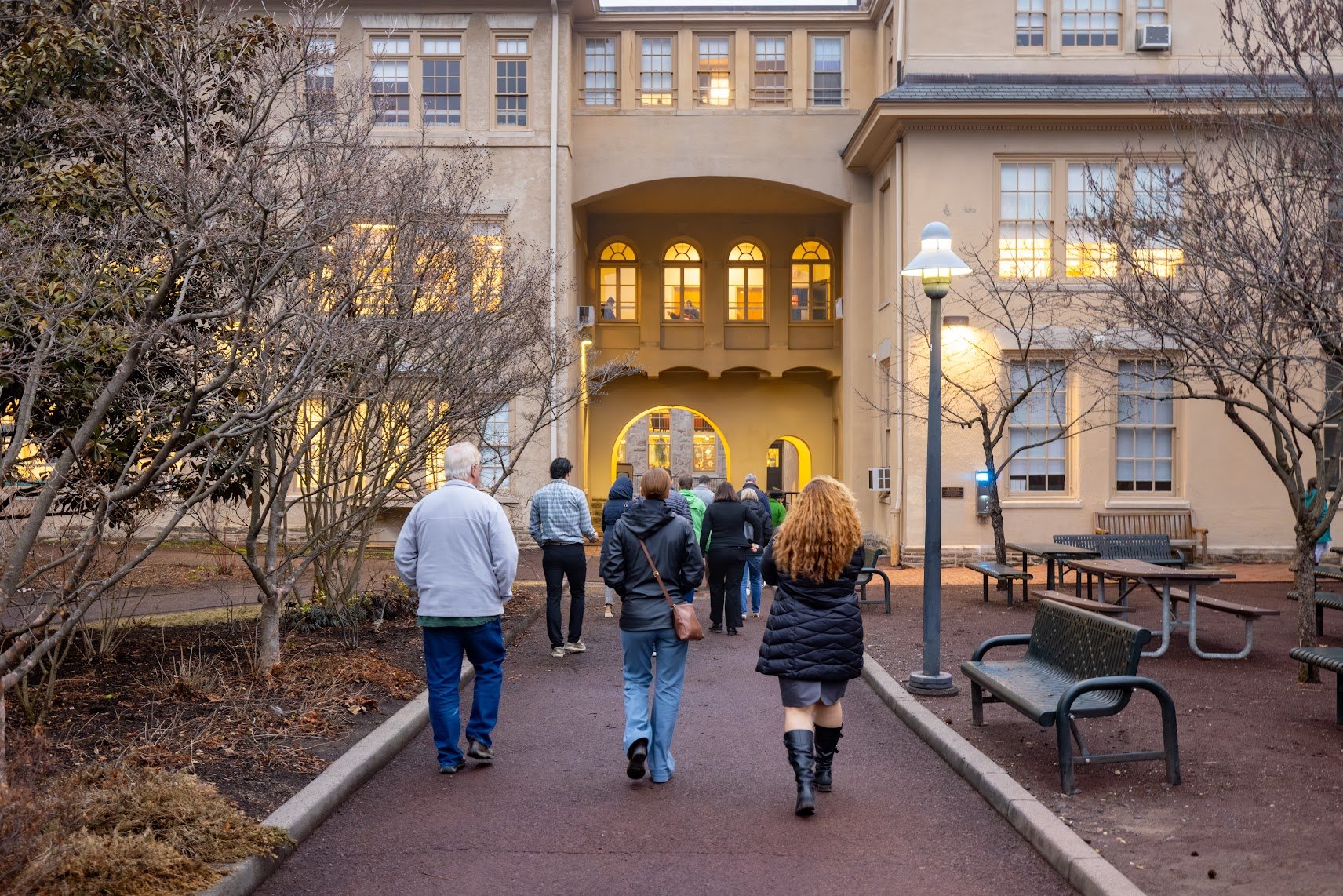
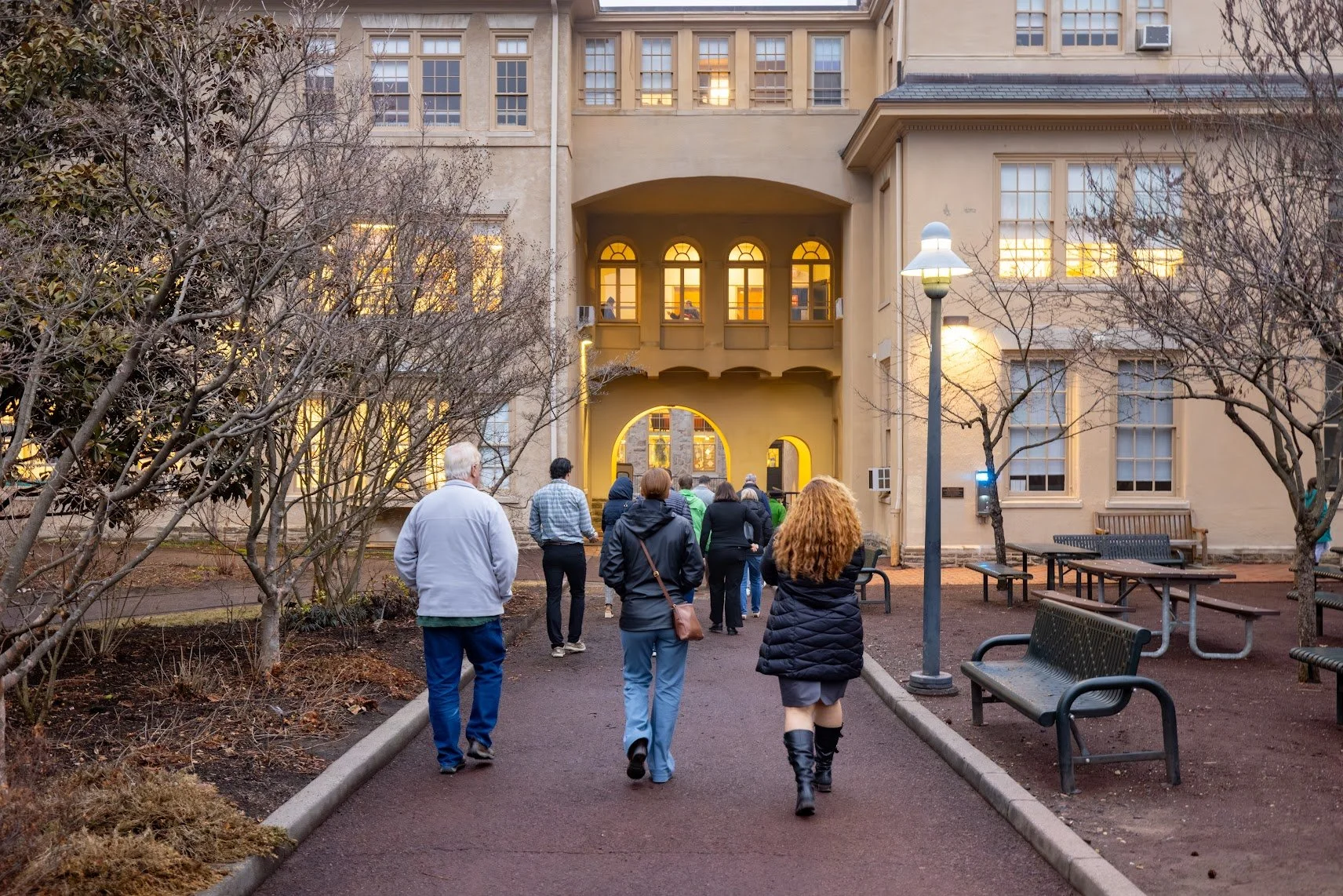
PAISBOA Sustainability members tour GFS's campus at the March meeting. Photo credit: GFS's Fernando Gaxiola.
Over 22 participants representing 14 schools and organizations gathered at GFS on March 5 for the meeting themed “Developing a School Sustainability Plan.”
A Welcome Rooted in Sustainability
Head of School Dana Weeks welcomed participants in the All School Commons, a striking example of adaptive reuse. Once a historic gymnasium, the space retains its original architectural character while now serving as a bright and welcoming dining hall.
Features of the Commons building include palladium windows that provide abundant natural daylight. Sustainability is also visible in daily operations: GFS composts food scraps, and students and faculty dine on repurposed willow oak tables crafted from a tree that once grew on campus.
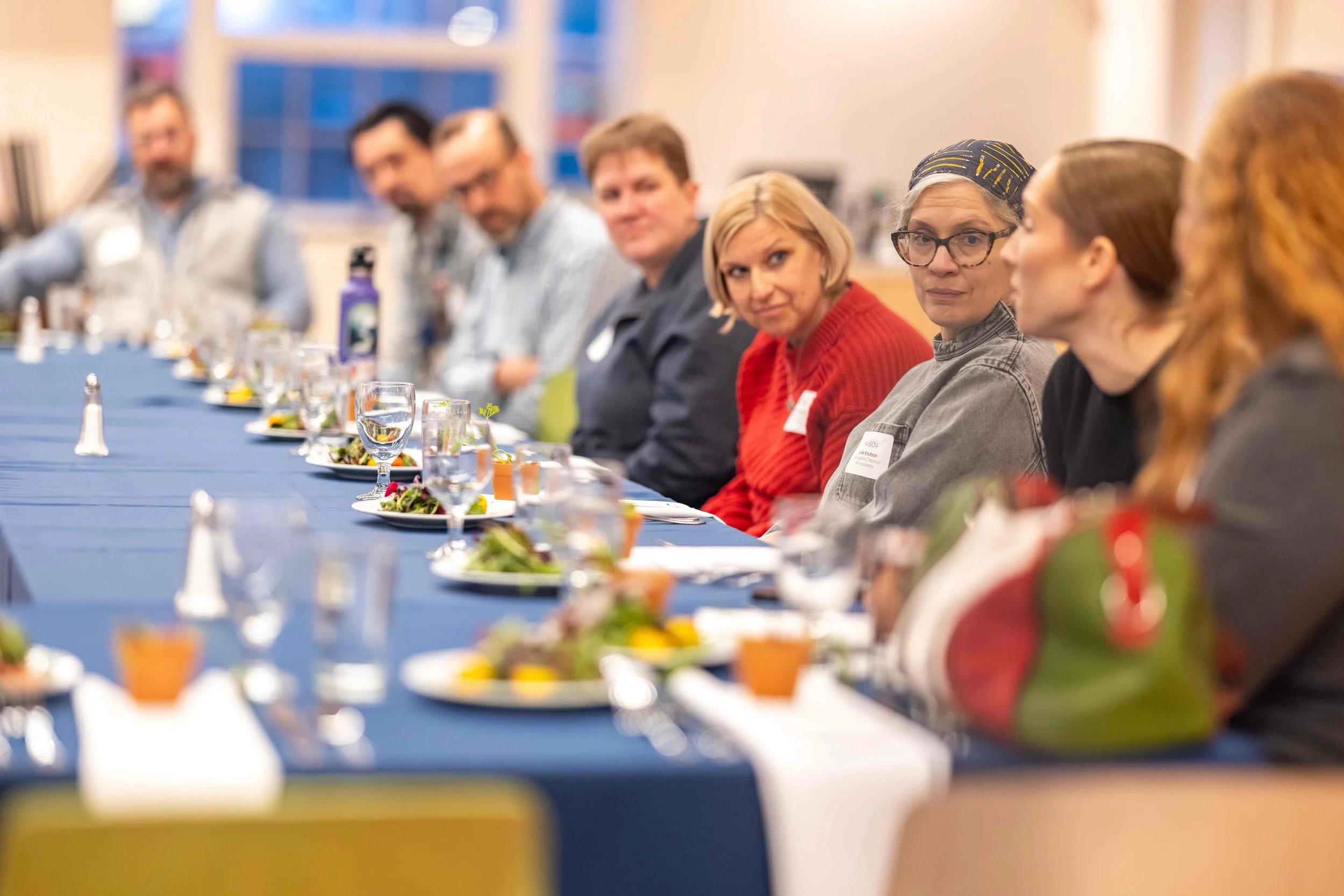
PAISBOA Sustainability participants enjoying a plant-based, low-waste dinner at GFS. Photo credit: GFS's Fernando Gaxiola.
Sustainable Design and Campus Stewardship
Upper School science teacher Susan Robinson led a tour of the Wade Science Building, a LEED Gold–certified building completed in 2009. Its sustainable features include a geothermal HVAC system, a solar array, EV charging stations, rainwater cisterns used for toilets, aquaponics in classrooms, a green roof, and cabinetry made from sustainably harvested sunflower seed–based materials.
Participants then explored the campus landscape with Arboretum and Horticulturalist manager Dan Comley. GFS has achieved Level 1 School Arboretum status, recognizing its commitment to tree stewardship and environmental education. Highlights included a 250-year-old American sycamore that stood during the Revolutionary War in Germantown, along with rain gardens, butterfly gardens, and a historic cemetery with tombstones dating to the 1800’s.
Sustainability in the Classroom
Lower School science teacher Tess Beckwith demonstrated how sustainability concepts are woven into everyday learning. Participants saw classroom critters including a leopard gecko named Lightning, bird-safety window stickers, and outdoor water tables used by students during a water study unit. Tess also shared highlights from a recent sustainability fair featuring community partners.
Sharing the Sustainability Story
During a creative plant-based dinner, Director of Sustainability Francine Locke outlined how GFS developed its Sustainability Plan—from identifying focus areas and collecting baseline data to defining goals and action steps. She emphasized the importance of “telling your story” to engage and inspire the broader community.
GFS sophomore Nevaeh Tice also shared her experience attending the United Nations Climate Change Conference COP 31 with students from GFS and Westtown. She noted, “Attending COP30 as one of the only American high school students was an experience I’ll never forget. I went to Belém excited to focus on oceans and water equity, but I didn’t expect to learn and grow as much as I did.”
Participants expressed how much they enjoyed the evening. As Friends’ Central teacher Claire Roberts reflected, “I always most appreciate getting to meet others doing this work and getting ideas by seeing spaces.”
PAISBOA is seeking a school to host a spring or fall 2026 Sustainability Meeting. Schools interested in exploring this opportunity can contact Mary Ann Boyer maryann@boyersudduth.com or Ron Hill rhill@paisboa.org.
Article printed in PAISBOA’s Friday Flyer Vol. XVI, No. 5 - March 20, 2026.